Exit at the floor, any time
Burn the NFT and take an equal share of the ETH reserve. No buyer, no listing, and no permission from us.
redeem()Press Enter or click to enter
Pixel ducks backed by ETH
Most of what each mint pays is locked straight into the contract's ETH reserve. You can burn your NFT at any time and take out the share that belongs to you — no buyer, no listing, and no permission from us.
[ THE ONLY ADDRESS ]
Check the address character by character before interacting. The one below is the only address we publish.
0x407473e40ffc43c8bb17d3735455248683f466df[ WHAT HOLDING ONE GETS YOU ]
Not roadmap promises — functions you can call on-chain right now. Each one names the method so you can check it yourself.
Burn the NFT and take an equal share of the ETH reserve. No buyer, no listing, and no permission from us.
redeem()A redemption takes only its own share, so what everyone else can take out never falls. It rises when anyone funds the reserve — fundReserve() is permissionless — and rounding can only push it up, never down.
floorPrice()Every NFT owns an ERC-6551 account. Rewards are paid there, so the stock it has accumulated transfers with it when the NFT is sold.
accountOf()Borrow ETH against the NFT. The floor guarantees what the collateral is worth, so liquidation needs no auction, no buyer and no oracle.
quote()[ WHAT THE REWARDS ARE PAID IN ]
A reward denominated in a project's own token shrinks exactly when the project is having a bad stretch, which is the moment holders are most likely to look at it. So rounds buy something else, and the panel above reads the pool they buy through — live, off the chain.
The floor is exposed to none of it. That is native ETH held by the NFT, and it owes no token anything.
[ THE CLUB'S OWN TOKEN ]
Not launched yetWhen it launches, the verified address appears here first. Treat an address from anywhere else as a fake — go by the address, never the name or symbol. Names and symbols can be copied; addresses cannot.
The club is named after $microduck, a community token for the same robot. That one is not ours and never was.
Reading the pool…
[ WHAT THE DUCK IS ]
MicroDuck is an open-source robot by Pollen Robotics: small enough for a desk, stubborn enough to stand back up after a fall. This club does not build it, sell it, or speak for the people who do. It draws it, and it puts a redeemable floor under the drawing.
SPECIFICATIONS: POLLEN ROBOTICSMeet the real robot ↗
[ ROBINHOOD CHAIN ]
The floor does not depend on us keeping our word, or on anyone being willing to buy. It is the contract's ETH reserve divided by the circulating supply, and anyone can read both numbers themselves. A redemption takes only its own share, so what everyone else can take out can only hold or rise. What lifts it is money sent into the reserve — fundReserve() is open to anyone, us included.
95% of every mint is locked into the contract's ETH reserve immediately. The share is fixed in the contract and cannot be changed after deployment — not by anyone, us included.
Burn the NFT and take reserve ÷ circulating supply back out in ETH. No buyer, no listing, and no permission from us.
The team's revenue is the 5% of each mint that does not enter the reserve, secondary royalties, market fees, and the Pons LP fees on the token — all of it separate from the reserve, which has no admin exit at all. The previous version took 20% of every mint, so everyone was down a fifth the moment they arrived. Not this time.
0xe4f45bf332269c9f90c0b07e5d74fe0909d3a441. Anyone can call distribute().Block explorer ↗[ TRY TO BREAK IT ]
This runs the contract's own arithmetic — 95% of each mint into the reserve, and reserve ÷ outstanding paid out per burn, in integer wei. The claim is not that the number goes up. It is that redeeming cannot push it down for anyone still holding.
A holder paid 0.0500 ETH and can take out 0.0475 ETH — the 5% that funds the team. Royalties are what closes that gap; add some above and finalize the mint.
[ TRAITS LOCKED ]
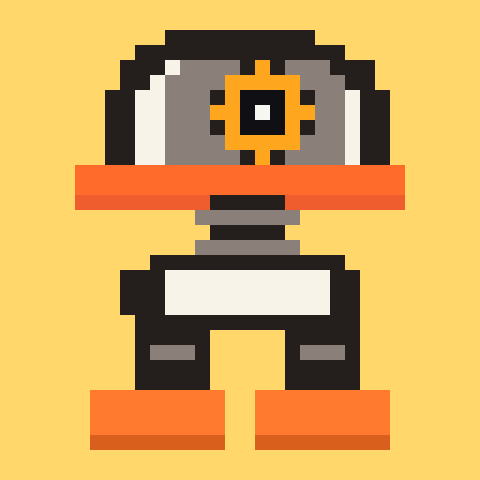
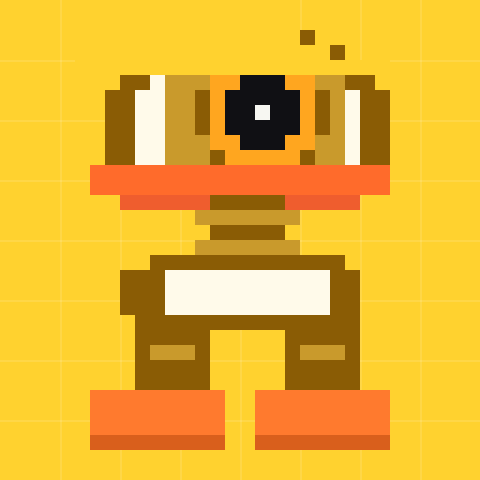
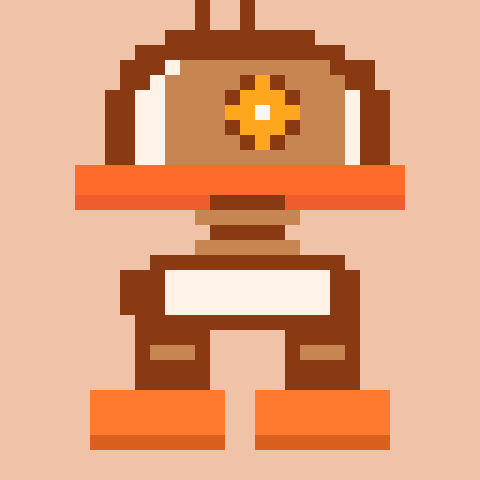
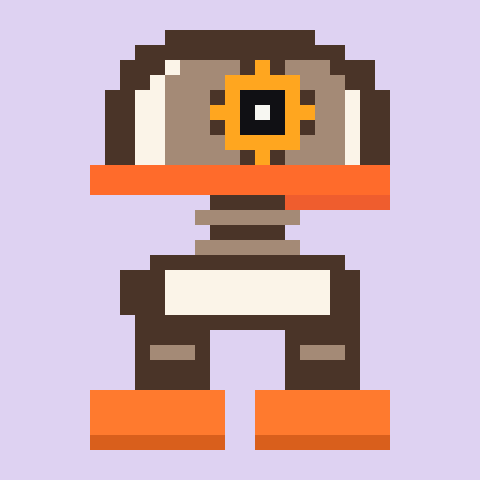
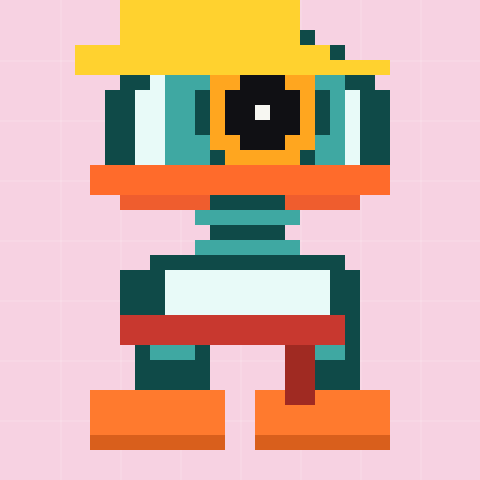
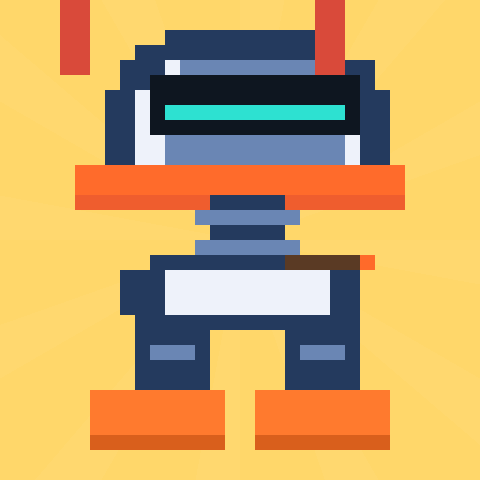
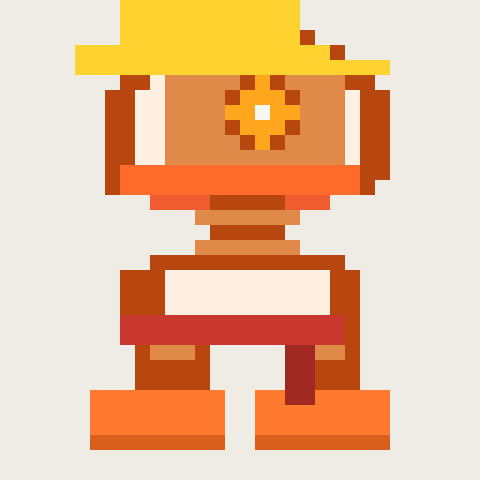
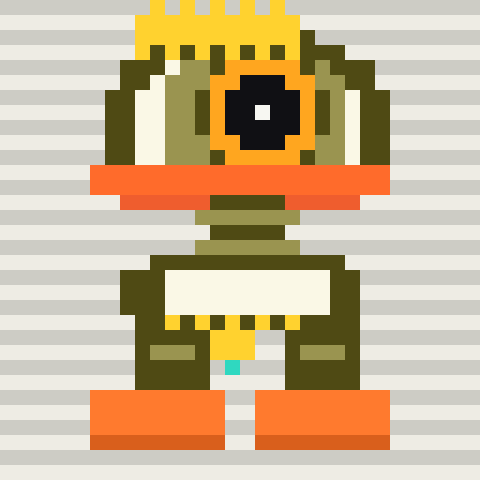
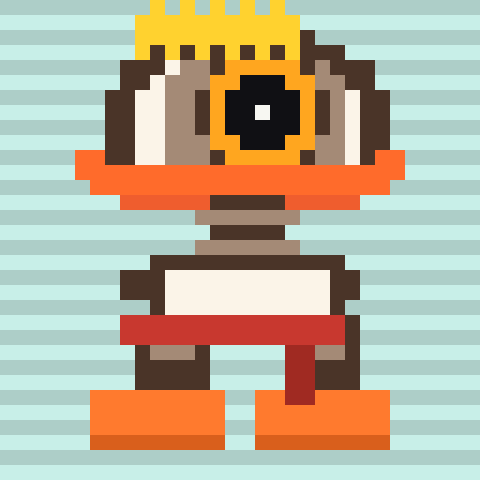
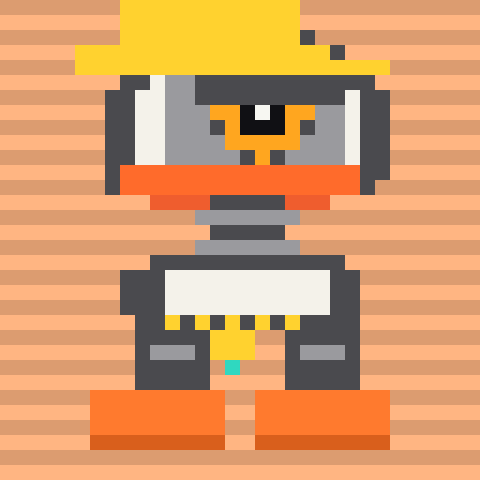
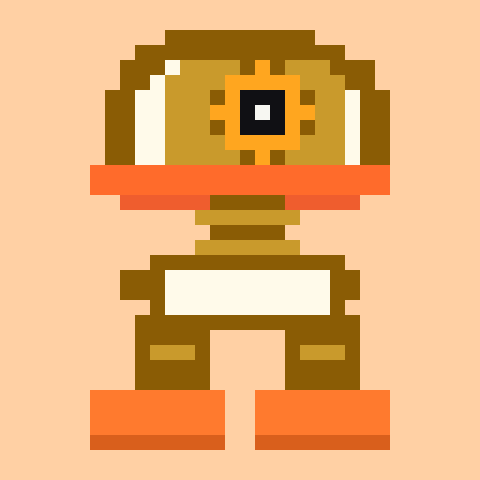
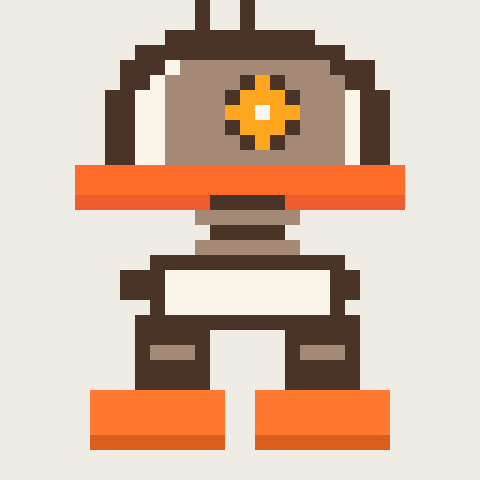
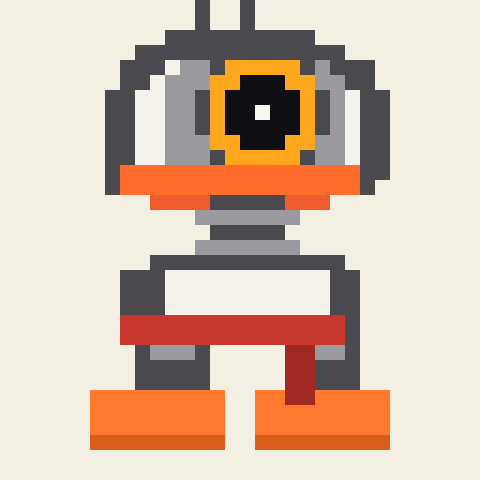
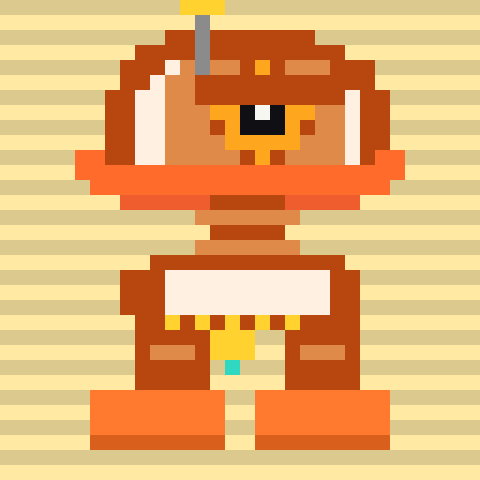
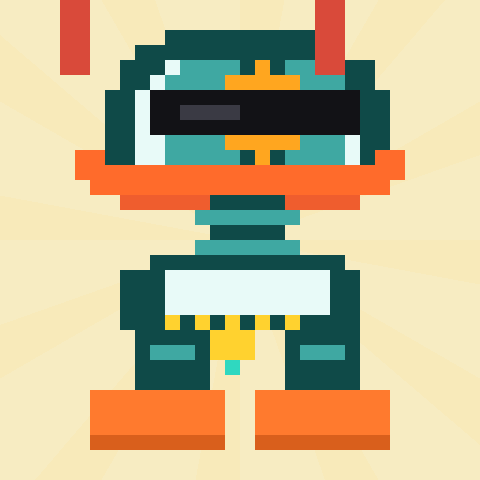
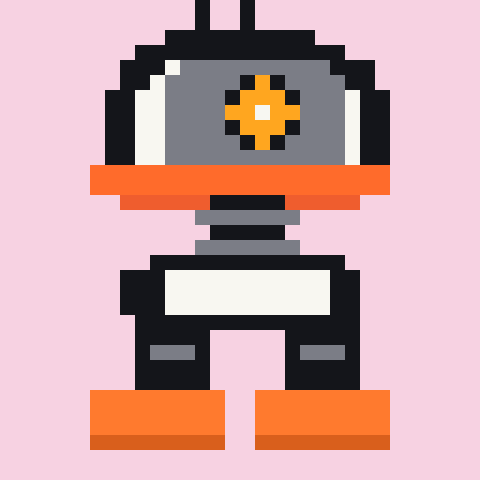
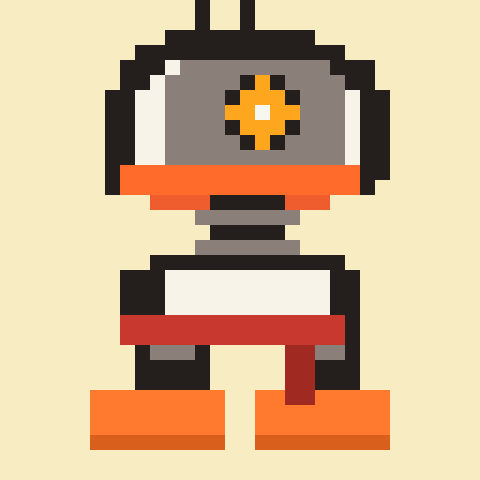
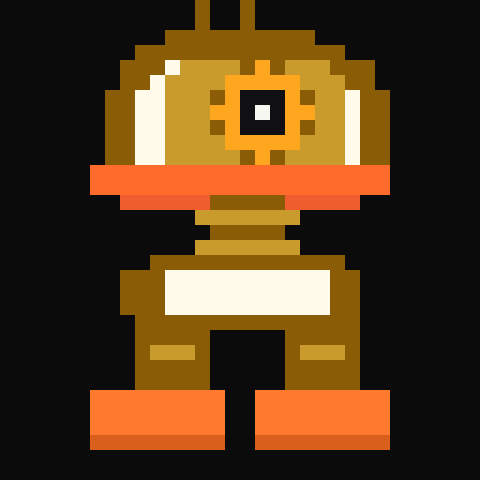
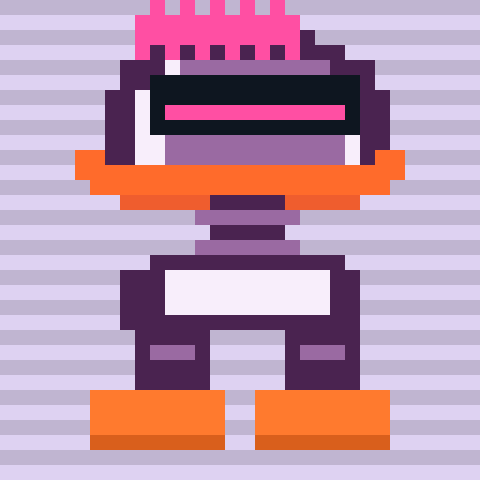
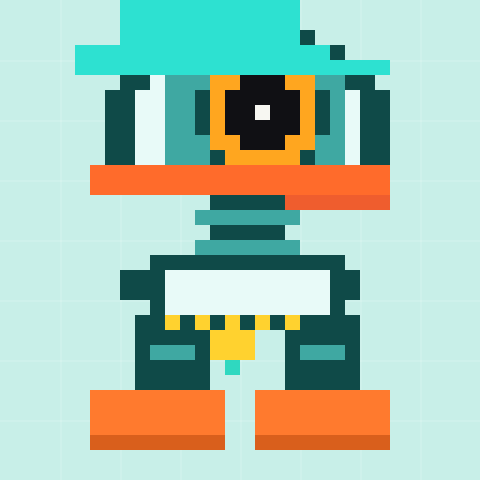
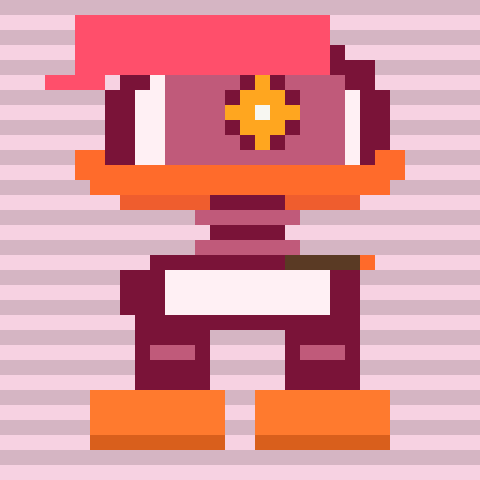
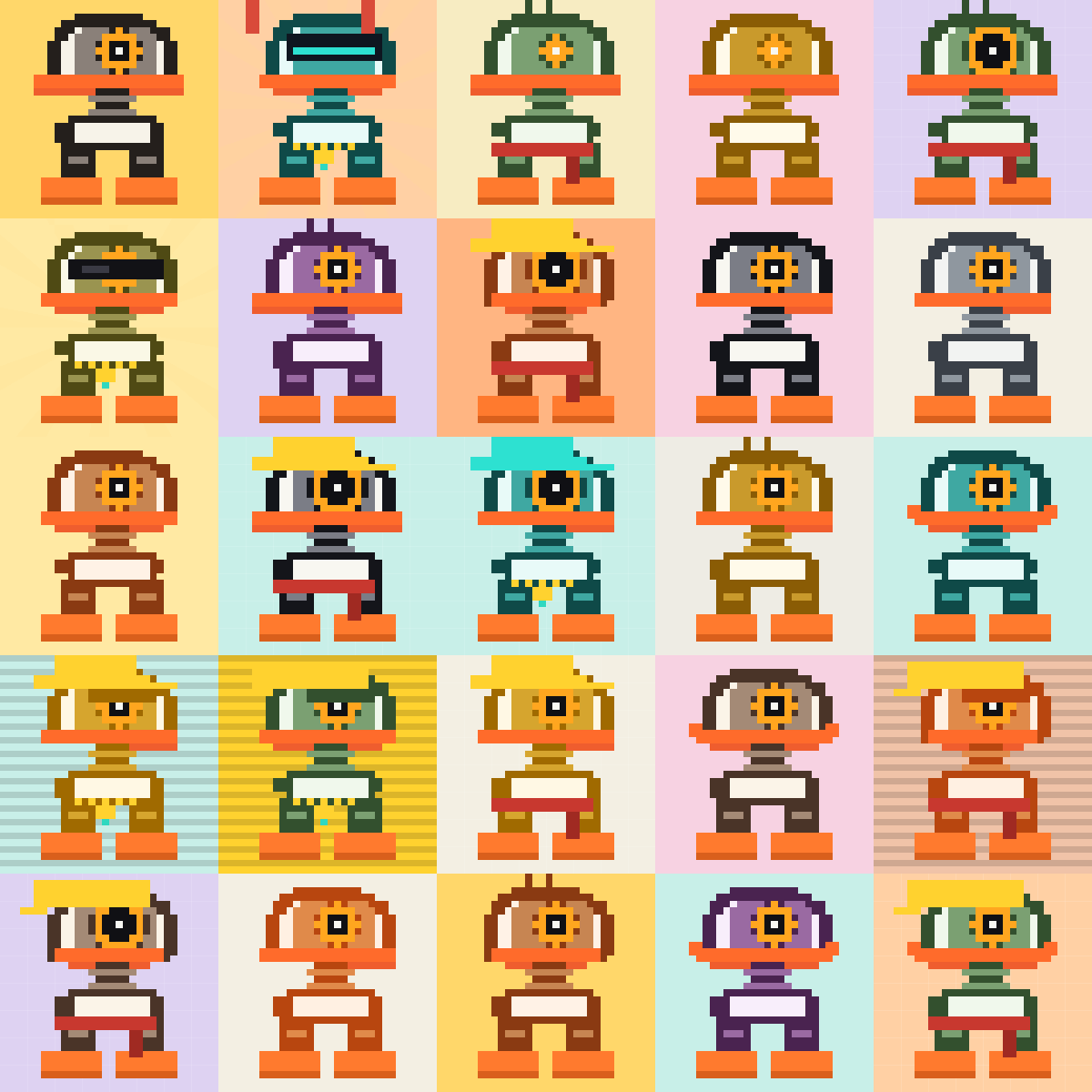
Backdrop, shell, brim, wings, lens, crest, charm — the combination sets the rarity, and the rarity sets your weight in every reward round. Traits are fixed before the mint opens, with no on-chain path to change them.
 FC_888SVG / LOCKED
[ ALL 888 ]
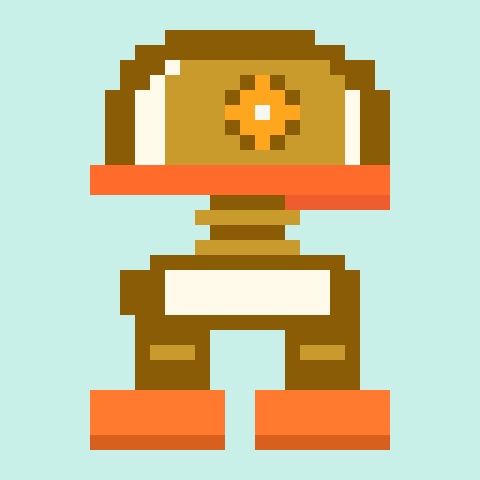
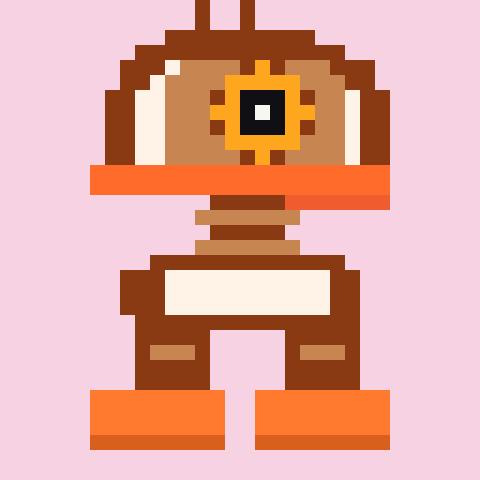
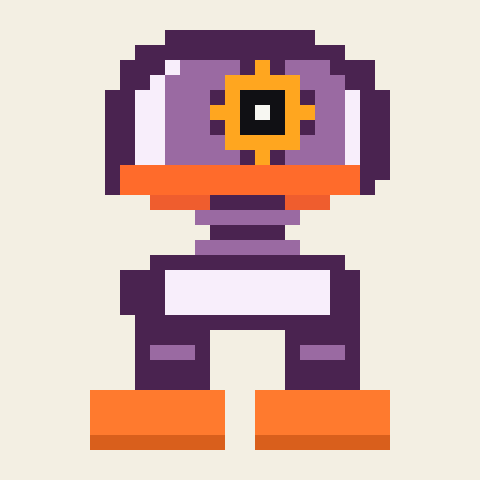
The whole collection is generated and published up front — the artwork the contract commits to is the artwork you can browse here. What is not decided yet is which token id gets which duck; that is what the reveal settles.
Reading the collection…
[ EIGHT 1/1s ]
[ RARITY AND WEIGHT ]
Five tiers, with counts fixed at deployment. The higher the tier, the more activation costs and the larger the share of every reward round.
[ PROGRESS ]
All 888 trait sets and rarities are fixed before the mint opens. There is no on-chain path to change them.
Each mint locks 95% straight into the ETH reserve. It can only leave by burning an NFT.
Launching through Pons, paired against NVDA — a real quote asset on this chain, carrying $7.4M against USDG. The verified address will be published here first; treat one from anywhere else as a fake. The token does not carry the floor: the ETH reserve does, and it owes nothing to any token's price.
Rarity sets weight, weight sets the share. Collateral has a guaranteed value, so liquidation needs no buyer.
[ Q AND A ]
Most of what each mint pays goes into a native ETH reserve held by the contract. Any holder can burn their NFT and take out reserve ÷ circulating supply. That is a contract-level right — no buyer required, and no permission from us.
It cannot. A redemption takes one share, so what everyone else can take out is unchanged, and integer rounding leaves the remainder behind rather than paying it out. What makes it rise is money sent into the reserve, which fundReserve() lets anyone do. Be clear about what does NOT do that on its own: secondary royalties are paid to the treasury and Pons LP fees to the dev wallet — neither reaches the floor unless it is deliberately forwarded. A floor backed by a project's own token is what falls; this one is native ETH and owes the token nothing.
No. The only function that pays out of the reserve is redemption, and redemption must burn an NFT. The team's share is split off to a separate account at mint time, and the two do not connect.
Yes. The supply is fixed at 888 and the contract has no mint-more function. Every trait combination is unique.
The 888 split across five tiers. Rarity sets both the activation cost and the reward weight — the rarer the duck, the larger its share of a round. The rarity table is written at deployment and has no setter.
It already trades on Robinhood Chain, and the only address is 0xD5f1afEA47b1A9eab414D2ee740cF1d6d039E725. Go by the address, never the name or symbol — names and symbols can be copied, addresses cannot.